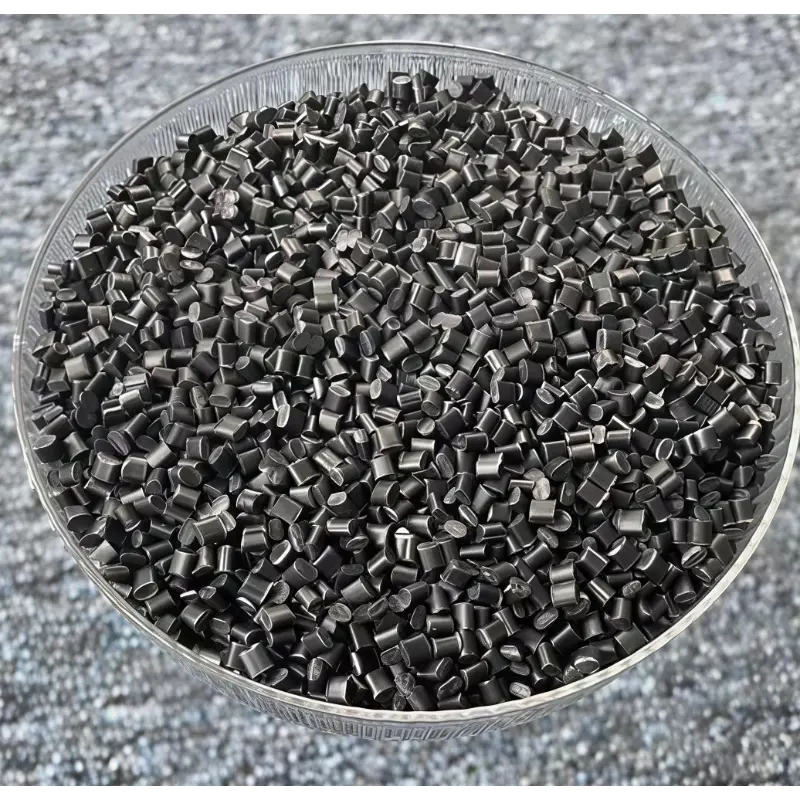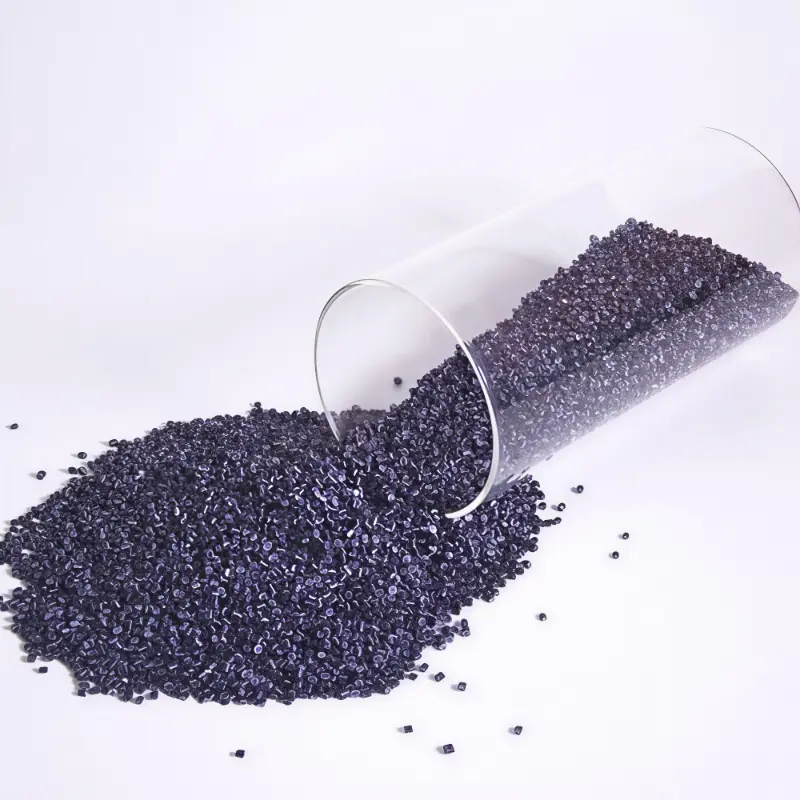
ACCOM supplies Injection Grade Glass Fiber Reinforced Polypropylene for molded components that require greater stiffness than conventional unreinforced polypropylene can provide. By incorporating glass fibers into the PP matrix, this material improves the rigidity and mechanical performance needed for selected structural and functional parts.
The PP-GF30 (HG73B) grade contains 30% glass fiber reinforcement and is suitable for evaluating in automotive components and industrial applications where dimensional stability and mechanical strength are important. Material selection should consider the component design, operating environment and required performance, as the final properties of molded parts are also influenced by fiber orientation, mold design and processing conditions.
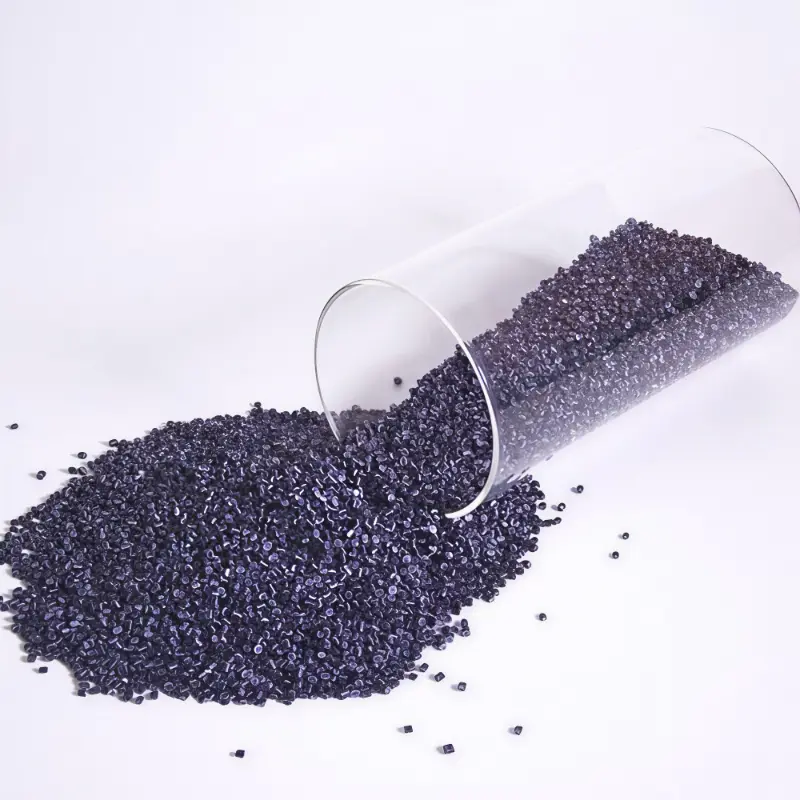
PP-GF30 (HG73B) is formulated for applications where unfilled polypropylene may not provide the required stiffness. The glass fiber reinforcement improves the rigidity of the polymer matrix, supporting the manufacture of functional components that must maintain their shape under mechanical loads.
The main material characteristics include:
30% glass fiber reinforcement: Provides increased stiffness and mechanical strength compared with unfilled polypropylene.
Dimensional stability: Supports component designs that require consistent geometry and assembly accuracy.
Aging and UV performance: Relevant to applications exposed to environmental conditions; suitability should be assessed against the grade's test data and intended service environment.
Injection molding compatibility: Suitable for evaluating in molded automotive and industrial components where material properties and part geometry must work together.
Glass fiber reinforcement increases the stiffness of polypropylene, helping molded components resist bending under mechanical loads. This makes the material relevant to structural supports, housings and functional parts that need to maintain their shape during use.
Injection Grade Glass Fiber Reinforced Polypropylene is suitable for applications that require a combination of rigidity and mechanical strength. Tensile strength and flexural modulus are useful indicators when assessing whether a particular grade can meet the structural requirements of the finished component.
Glass fiber reinforcement can improve dimensional stability compared with unreinforced PP in suitable applications. However, shrinkage and warpage are also affected by fiber orientation, wall thickness, mold geometry and cooling conditions. These factors should be considered when designing precision injection-molded parts.
This reinforced PP compound is intended for injection-molding applications where component geometry, stiffness and mechanical performance influence material selection. The selected grade should be evaluated against the required strength, impact resistance and service conditions of the finished part.
Suitable for evaluating selected automotive structural and functional components that require rigidity, mechanical strength and dimensional stability. The material grade should match the component's mechanical, thermal and environmental requirements.
Can be considered for molded supports, equipment housings and functional parts that require greater stiffness than conventional polypropylene. Component geometry and operating loads should guide material selection.
Glass fiber reinforced PP may be used for housing structures and internal components where resistance to bending and dimensional consistency are important. The appropriate grade depends on the part's design and performance requirements.
Glass fiber reinforcement changes the performance balance of polypropylene, making PP-GF30 a relevant option for components that require increased stiffness.
|
Comparison Factor |
PP-GF30 (HG73B) |
Unfilled PP |
|
Rigidity |
Increased through glass fiber reinforcement |
Depends on the base PP grade |
|
Mechanical strength |
Reinforcement supports higher structural performance |
May be insufficient for some load-bearing designs |
|
Dimensional performance |
Improved in suitable applications; fiber orientation affects shrinkage |
Depends on the formulation and molding process |
|
Elongation and impact behavior |
Must be assessed for the specific reinforced grade |
Depends on the unfilled grade and formulation |
|
Component design |
Suitable for applications prioritizing rigidity and structural support |
Suitable when the mechanical and dimensional requirements can be met without reinforcement |
Note: The main advantage of PP-GF30 is the improved stiffness and structural performance provided by glass fiber reinforcement. However, higher reinforcement does not automatically make a material suitable for every component. Elongation, impact resistance, shrinkage behavior and surface appearance should also be evaluated during material and mold design.
When selecting Injection Grade Glass Fiber Reinforced Polypropylene, consider the following factors:
Glass fiber content: Compare the reinforcement level with the required stiffness and mechanical performance.
Mechanical properties: Review tensile strength, flexural modulus and impact resistance against the component's design requirements.
Dimensional requirements: Consider shrinkage, warpage risk, fiber orientation and mold design, especially for parts with assembly tolerances.
Operating conditions: Evaluate service temperature, mechanical loading and exposure to oils or chemicals where applicable.
Injection molding requirements: Assess the material's processing characteristics alongside component geometry and mold design.
ACCOM's PP-GF30 (HG73B) is one option for applications requiring 30% glass fiber reinforcement. Comparing the grade's technical data with the intended component requirements helps determine its suitability for a specific application.
It is a polypropylene compound reinforced with glass fibers for injection-molded components that require increased rigidity, mechanical strength and dimensional stability.
Glass fiber reinforcement can increase stiffness and improve mechanical performance compared with unreinforced PP. The extent of improvement depends on the glass fiber content, formulation and molding conditions.
PP-GF30 generally refers to polypropylene reinforced with 30% glass fiber. ACCOM identifies HG73B as its PP-GF30 grade.
It can be considered for selected automotive components that require structural rigidity and mechanical strength. The grade must meet the component's specific mechanical, thermal and environmental requirements.
Contact ACCOM with your application details, component drawings and performance requirements to discuss PP-GF30 (HG73B) and the relevant material specifications.
Address
120 Robinson Road Singapore Zip Code: 068913
Tel
Copyright © 2024 Suzhou Accom New Material Technology Co., Ltd. All Rights Reserved.