Polyamide is an engineering thermoplastic family known for its combination of mechanical strength, wear behavior, toughness, and processing versatility. Its performance is not determined by the material name alone. Polymer type, additives, reinforcement, moisture condition, component design, and manufacturing settings all affect the result. This guide explains the main characteristics of polyamide, compares common grade families, examines modification and processing considerations, and outlines a practical approach to selecting and validating materials for industrial applications.
Explore each topic directly. Select any section below to jump to the corresponding discussion.
Polyamide is a family of thermoplastic polymers characterized by recurring amide groups in the molecular chain. Commonly known as nylon, it includes several material types with different combinations of strength, rigidity, flexibility, thermal response, moisture absorption, and chemical resistance. This range of characteristics makes the family relevant to both general-purpose products and technically demanding components.
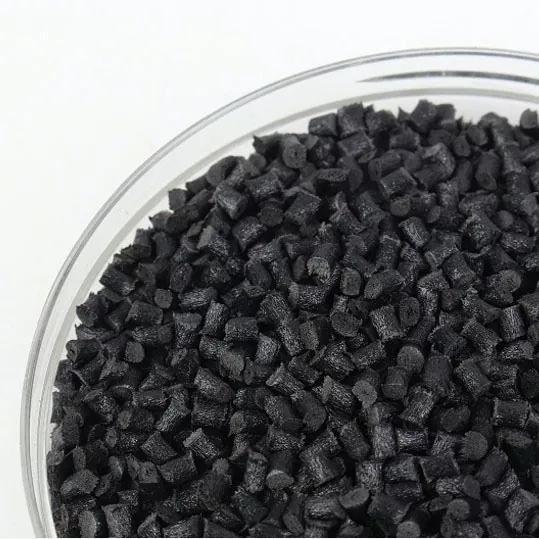
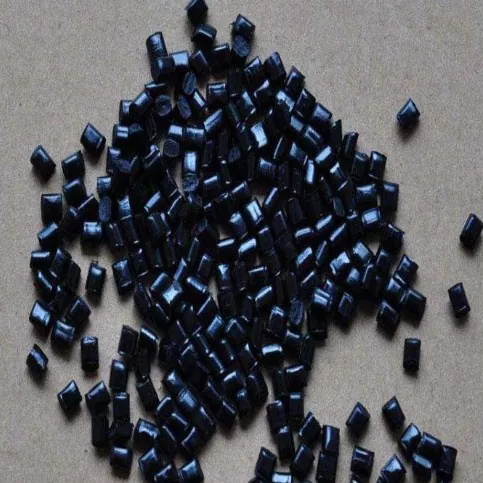
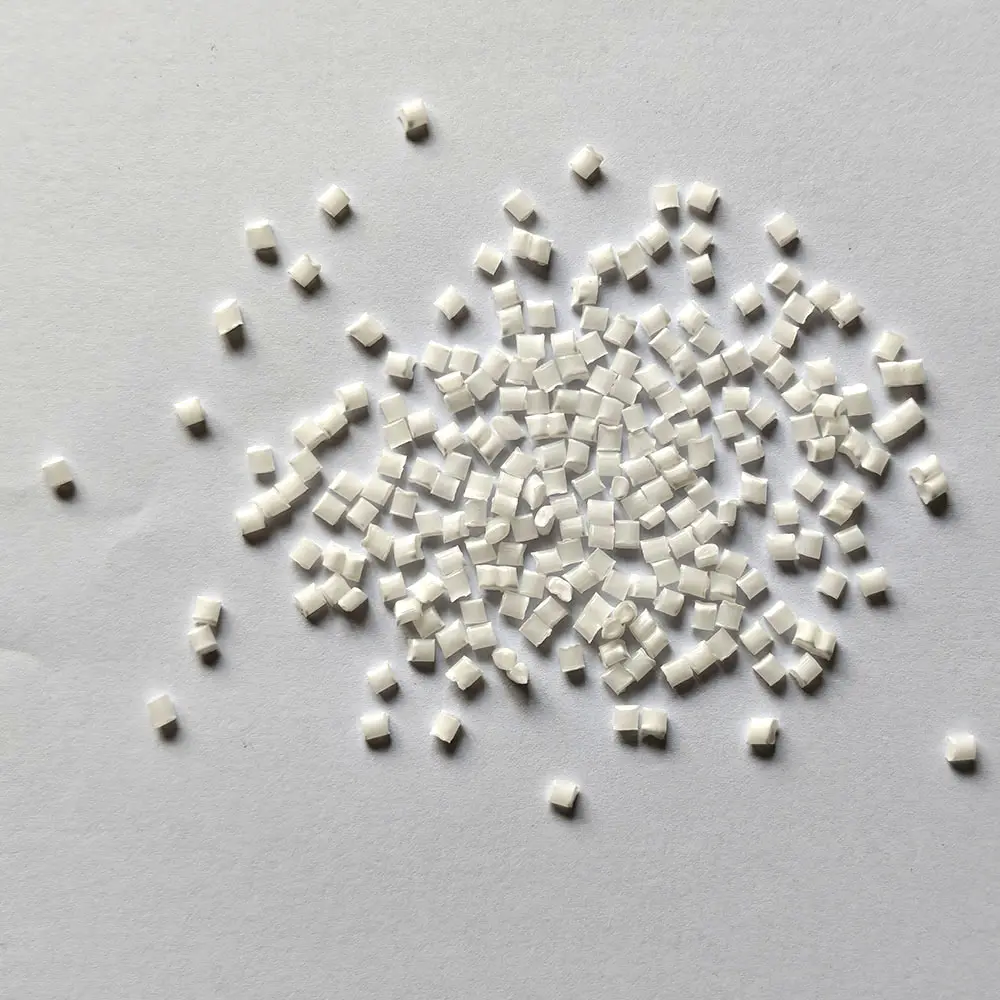
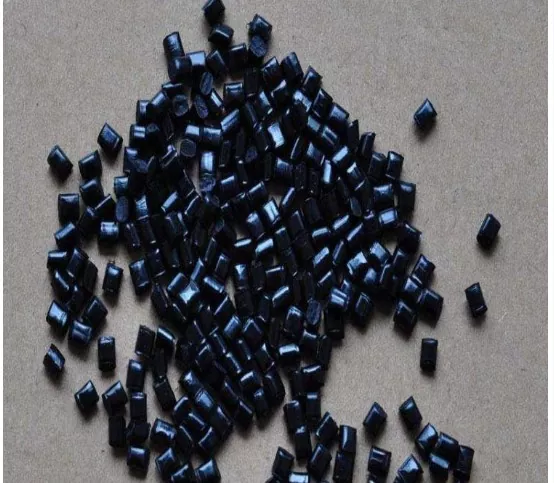
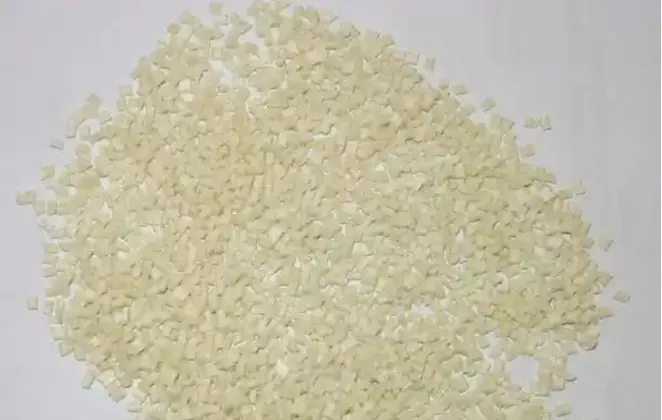
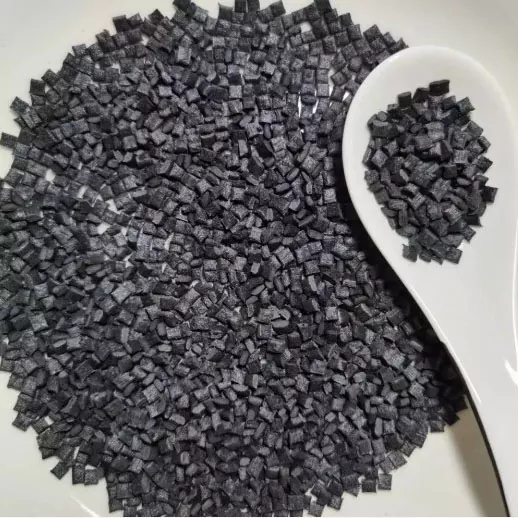
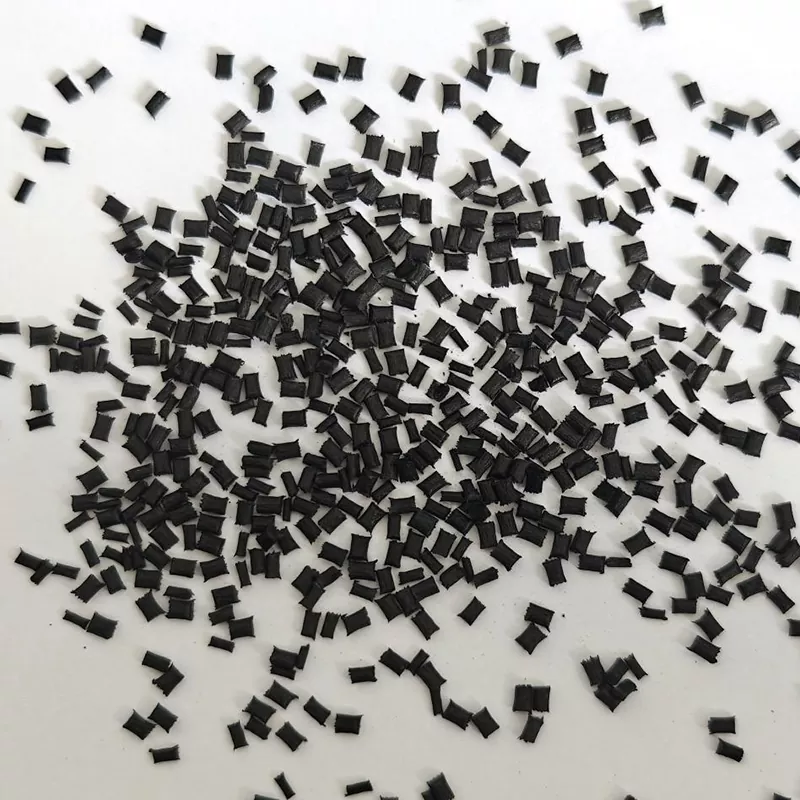
Polyamide Plastic Pellets are granular polymer feedstocks that can be processed into finished plastic products using suitable manufacturing methods. During production, the granules are conveyed, melted, shaped, and cooled or otherwise solidified according to the intended process. The final component's performance depends on the resin formulation and the conditions under which the material is processed.
Unlike a single-purpose material, polyamide can be formulated for different engineering objectives. An unreinforced grade may provide a useful balance of toughness and processability, while a reinforced compound may offer greater stiffness. Other formulations are developed to address impact, friction, wear, thermal behavior, or dimensional requirements.
Polymer structure influences how a material responds to stress, heat, and its surrounding environment. Molecular arrangement and crystallinity affect rigidity, shrinkage, and thermal behavior. Formulation additives can further modify how the resin performs, while processing conditions influence the structure formed during solidification.
This is why two grades within the same family should not automatically be treated as interchangeable. Even when their general purpose appears similar, they may differ in flow behavior, reinforcement, moisture response, dimensional change, and suitability for particular service environments.
Core principle: Material selection should begin with the required performance of the finished component. The most appropriate resin is the one that satisfies its defined mechanical, thermal, environmental, and manufacturing requirements as a combined system.
The usefulness of an engineering thermoplastic depends on more than one headline property. Mechanical strength, stiffness, toughness, friction, wear, and thermal response may interact with one another. Understanding these relationships provides a more reliable basis for selecting a material than comparing isolated figures.
Many polyamide grades provide useful tensile strength and rigidity for functional components. These properties can support the design of housings, brackets, gears, clips, mounting elements, and other parts that need to retain their shape under load.
Reinforcement may further improve stiffness and strength, but the degree of improvement depends on the formulation, reinforcement content, fiber orientation, specimen condition, and manufacturing process. A material's published tensile strength does not directly establish the allowable load of a finished part, which is also influenced by geometry, wall thickness, stress concentrations, weld lines, and operating temperature.
Toughness describes how a material responds to deformation and fracture under particular loading conditions. Some grades combine strength with useful impact resistance, making them suitable for components exposed to handling, vibration, or mechanical shocks. Other grades prioritize rigidity and may respond differently under impact.
Performance can change with temperature, moisture condition, aging, and component geometry. Applications involving repeated loads should therefore consider fatigue behavior and the possibility of stress concentration around holes, corners, fastening points, or changes in wall thickness.
Polyamide is used in certain moving components because selected grades provide useful wear resistance and frictional behavior. Potential applications include gears, guides, sliding elements, and other mechanical interfaces. Specialized formulations may include additives intended to modify friction or improve wear performance under defined conditions.
Actual wear depends on contact pressure, sliding speed, surface finish, temperature, counterface material, contamination, and lubrication. A grade that performs well in one mechanism may not provide the same service behavior in a different assembly.
Thermal behavior varies substantially across the material family. Some grades are suited to elevated-temperature service, while specialty or reinforced formulations can provide different levels of stiffness retention and dimensional stability. Continuous service temperature, short-term heat exposure, melting temperature, and heat-deflection temperature describe different aspects of performance and should not be used interchangeably.
Selected grades also serve electrical and electronic applications because they combine mechanical functionality with electrical insulation. Component design should take humidity, electrical stress, temperature changes, and applicable product requirements into account when evaluating the intended grade.
Grade selection often starts with the base polymer. PA6, PA66, PA12, and specialty polyamides are commonly considered for different balances of mechanical, thermal, moisture-related, and processing performance. Their properties overlap, so the intended operating conditions must guide the final comparison.
| Material Family | Typical Characteristics | Potential Uses | Important Considerations |
|---|---|---|---|
| PA6 | Often combines toughness, strength, wear behavior, and practical processability. | Mechanical parts, functional housings, gears, and general engineering components. | Evaluate moisture-related dimensional changes, stiffness, and service temperature. |
| PA66 | Often provides a useful combination of stiffness, strength, and thermal performance. | Automotive parts, electrical connectors, structural components, and machinery elements. | Consider drying requirements, conditioning, thermal exposure, and chemical compatibility. |
| PA12 | Often exhibits relatively low moisture absorption within the polyamide family and useful flexibility. | Selected tubing, fluid-handling parts, and components requiring dimensional control. | Verify pressure, temperature, fluid compatibility, and mechanical performance for the exact grade. |
| Specialty polyamides | Can be engineered for specific thermal, chemical, electrical, or dimensional requirements. | Specialized automotive, electrical, industrial, and technical applications. | Check detailed grade data, processing conditions, and application-specific test results. |
Technical data should be compared under equivalent test conditions. Tensile properties measured on dry specimens, for example, should not be compared directly with values obtained after moisture conditioning without accounting for the difference. Likewise, the properties of a glass-fiber-reinforced compound should not be assumed to represent an unreinforced grade.
A higher stiffness value does not automatically make a grade more suitable. A part requiring repeated flexing may benefit from a different property balance than a rigid structural component. The decision should reflect the complete operating profile rather than a single test result.
Material formulations can be adjusted through reinforcement, fillers, impact modifiers, lubricating additives, and other carefully selected ingredients. These changes help address specific engineering requirements, but they can also alter other properties. The most useful formulation is not necessarily the one with the greatest amount of reinforcement or the largest number of additives.
Glass fiber is commonly added when greater rigidity, strength, or resistance to deformation is required. Reinforced grades can be suitable for components carrying structural loads or operating under conditions where an unreinforced resin does not provide sufficient stiffness.
However, fiber orientation can produce directional differences in strength and shrinkage. Gate position, flow paths, wall thickness, and cooling conditions can affect the orientation of fibers in a molded part. These factors may influence warpage, dimensional consistency, surface appearance, and local mechanical performance.
Mineral fillers may be used to adjust stiffness, shrinkage, and dimensional behavior. Their effect depends on filler type, concentration, dispersion, and interaction with the polymer matrix. Although a formulation may reduce shrinkage in one direction, uneven filling or cooling can still cause warpage in a complex geometry.
Impact modifiers are used to improve resistance to fracture or brittle behavior under relevant conditions. This can be important for components exposed to impact, handling stress, or lower operating temperatures. The result depends on the modifier and the base resin, and an increase in toughness may be accompanied by a change in stiffness or thermal performance.
Specialized formulations can incorporate additives that modify friction and wear. These grades may be considered for moving components where the contact conditions make frictional performance an important design factor.
Testing should reflect the actual contact pressure, movement, temperature, counterface, and lubrication conditions. A formulation's general wear description is not sufficient evidence that it will perform equally well in every mechanism.
Selection tip: Modification should solve a defined performance requirement. Review the benefits and trade-offs together, including mechanical properties, dimensional stability, processing behavior, appearance, and the intended service environment.
Moisture absorption is an important consideration for many polyamide grades. The amount of water absorbed depends on polymer chemistry, formulation, humidity, temperature, and exposure duration. Absorbed moisture can change dimensions and mechanical properties, including stiffness and ductility.
These changes are part of the material's behavior and should be considered during design and quality control. They are particularly relevant to components with close tolerances or parts that must maintain fit across different environmental conditions.
Moisture present during melt processing can contribute to processing instability and, under unsuitable conditions, polymer degradation. The potential effects depend on the grade, moisture content, melt temperature, and residence time. Surface defects, inconsistent filling, and changes in material performance may warrant an investigation of drying and material handling.
Temperature affects stiffness, strength, deformation, and long-term aging. A material that meets a room-temperature requirement may respond differently under sustained heat or frequent temperature changes. Chemical exposure, humidity, and mechanical stress can further influence its service performance.
Designers should distinguish short-term thermal resistance from the ability to retain properties during continuous service. Where long-term exposure is important, the evaluation should use grade-specific data and relevant aging conditions instead of relying on a generic temperature figure.
Dimensional measurements can change as molded components cool, absorb moisture, or approach their equilibrium condition in a particular environment. Reinforcement, material orientation, wall thickness, mold design, and cooling balance also influence shrinkage and warpage.
For close-tolerance components, define whether dimensions are measured immediately after molding, after a specified conditioning period, or after exposure to the expected operating environment. A clear acceptance method makes results more comparable and reduces uncertainty during production inspection.
The properties of a resin are only part of the final outcome. Material preparation, melt handling, tooling, cooling, and inspection all contribute to finished-part performance. Processing parameters should be established for the exact grade, production equipment, and component design.
Verify material identity, lot information, packaging condition, storage history, and the required moisture condition before feeding the equipment.
Follow the grade-specific processing window and manage residence time, feeding, and machine conditions to limit unnecessary thermal or mechanical stress.
Consider gate location, venting, flow length, wall thickness, shrinkage, cooling balance, and reinforcement orientation where applicable.
Check dimensions, appearance, and relevant functional properties while recording production conditions and material identification.
Injection molding produces components by filling a mold cavity with molten thermoplastic and allowing the material to solidify. Melt temperature, mold temperature, injection speed, packing, cooling, and venting can influence fill quality, shrinkage, weld lines, surface appearance, and internal structure.
Reinforced grades may require additional attention to fiber orientation, gate design, and wear on the screw and barrel. Processing settings developed for an unreinforced resin should not be transferred automatically to a reinforced formulation.
Extrusion forms continuous products through a die. Stable feeding, melt conditions, die flow, and downstream cooling affect the consistency of the finished profile or tube. Product geometry and the intended service conditions determine which dimensions and functional properties need particular attention.
When a defect occurs, consider material condition, processing parameters, tooling, component design, and measurement methods together. Changing the resin alone may not resolve a problem caused by an unsuitable mold design or inconsistent production conditions.
Different polyamide grades serve different functions across industrial manufacturing. Their application range reflects the ability to balance mechanical, thermal, frictional, and processing requirements through appropriate material selection and formulation.
Potential applications include selected structural housings, brackets, clips, gears, and fluid-related components. Parts exposed to heat, vibration, fluids, or repeated mechanical stress require particular attention to thermal aging, chemical compatibility, fatigue, and dimensional stability. Reinforced formulations may be considered where additional rigidity or load-bearing performance is necessary.
Selected grades are used for connectors, cable-management components, switch parts, and equipment housings. Relevant considerations can include electrical insulation, dimensional tolerances, moisture exposure, temperature changes, and applicable flammability or product-standard requirements.
Gears, guides, sliding elements, and selected bearing-related components may use grades with appropriate wear and mechanical characteristics. Contact pressure, speed, lubrication, alignment, and heat generated by friction should be evaluated because they influence performance in the assembled mechanism.
Functional housings, fastening features, appliance components, and other molded parts may use polyamide where strength, toughness, or durability is important. Appearance, surface finish, environmental exposure, and manufacturing requirements also contribute to the selection process.
These examples describe potential application areas rather than universal material recommendations. Every component should be evaluated against its actual operating conditions and applicable product requirements. Suitability for one industry or component type does not automatically establish suitability for another.
Effective selection starts with the component's required function. Instead of beginning with a generic claim about material quality, define the physical demands, environmental conditions, manufacturing method, and compliance requirements that the resin must satisfy.
When evaluating Polyamide Plastic Pellets for a production project, the following sequence helps turn broad requirements into a more focused technical assessment.
These details help narrow the selection by connecting actual requirements to relevant grade characteristics. When available data does not address a critical condition, an appropriate test or engineering assessment should be defined instead of assuming that a general property value is sufficient.
Quality evaluation helps determine whether a resin and its manufacturing process can consistently support the finished component's requirements. A useful assessment considers material identity, technical documentation, incoming condition, processing behavior, and part-level performance.
Technical data sheets provide a starting point for comparing mechanical, thermal, and processing properties. Review the exact grade designation and the test methods used. Specimen preparation, moisture condition, temperature, and test standards can all affect reported values, so comparisons should use equivalent conditions whenever possible.
Material identification, batch information, packaging integrity, and agreed incoming checks help manufacturing teams investigate variations. Depending on the project, checks may include document review, appearance, moisture condition, or selected laboratory tests. The appropriate controls should reflect the defined specification rather than an arbitrary universal checklist.
Standardized resin tests do not reproduce every feature of a real component. Geometry, flow orientation, weld lines, molding conditions, moisture conditioning, and assembly can all change actual performance. Component-level testing is therefore important where the application involves close tolerances, demanding loads, or specific environmental requirements.
| Evaluation Area | What to Check | Purpose |
|---|---|---|
| Mechanical performance | Relevant strength, stiffness, impact, and wear data. | Compare the grade with the component's functional requirements. |
| Moisture condition | Storage, drying, and permitted moisture level. | Control processing behavior and moisture-related dimensional changes. |
| Thermal behavior | Operating temperature, exposure duration, and aging requirements. | Assess suitability for the intended service environment. |
| Dimensional performance | Critical dimensions, shrinkage, warpage, and conditioning state. | Support fit, assembly, and production consistency. |
| Documentation | Applicable declarations, test reports, and traceability records. | Support defined quality and compliance requirements. |
Clear acceptance criteria should be established before routine production. Consistent records help identify whether a deviation originates from material variation, processing, tooling, assembly, or measurement. This makes corrective action more focused and helps maintain repeatable component performance.
Material-related issues can arise from multiple interacting factors. Before changing the grade, investigate the observed problem and determine whether it may be associated with resin condition, processing, design, or the test environment.
Review moisture absorption, conditioning history, cooling balance, shrinkage, reinforcement orientation, and the timing of measurements. Compare the parts under equivalent temperature and humidity conditions before concluding that a material change is necessary.
Check material drying, melt conditions, contamination, venting, gate design, and the recommended processing window. Different defects can have different causes, so adjustments should be based on observations rather than on a single assumed explanation.
Confirm the exact grade, reinforcement level, specimen condition, and test method. Then examine the component geometry, temperature, moisture state, weld lines, and loading pattern. A tougher or more highly reinforced formulation may be worth evaluating, but its other properties should also be reviewed.
Investigate pressure, movement speed, lubrication, surface finish, counterface material, contamination, and heat generation. Where necessary, compare candidate grades under representative contact conditions rather than relying only on a broad wear-resistance description.
Recording the material batch, processing settings, environmental conditions, and test method provides a stronger basis for diagnosing recurring problems. It also makes it easier to verify whether a proposed change resolves the issue without creating another performance limitation.
Find concise answers to common questions about material characteristics, processing, and grade selection.
They serve as feedstock for manufacturing functional plastic components, including selected automotive parts, electrical connectors, mechanical gears, housings, and industrial equipment components. The suitable grade depends on the part's mechanical, thermal, environmental, and processing requirements.
PA6 and PA66 have different polymer structures and typically show different balances of stiffness, toughness, thermal behavior, processing characteristics, and moisture response. The exact grade data and the intended operating conditions should guide the comparison.
Many polyamide grades require controlled moisture management before melt processing. The required drying conditions depend on the particular formulation, packaging condition, and supplier recommendations. Follow the relevant technical data sheet rather than applying one setting to every grade.
No. Glass fiber can increase stiffness and strength but may also affect directional shrinkage, warpage, impact behavior, surface appearance, and equipment wear. Reinforcement is most useful when its benefits match the component's requirements and its trade-offs are acceptable.
Selected grades are suitable for certain elevated-temperature applications. Suitability depends on the continuous operating temperature, exposure duration, mechanical load, aging behavior, and surrounding environment. Use grade-specific technical data and suitable application testing.
Important factors include polymer grade, moisture absorption, reinforcement, component geometry, mold design, cooling conditions, and the environment in which the part is measured or used. Close-tolerance parts need clearly defined conditioning and inspection procedures.
Compare equivalent test data, moisture and temperature behavior, processing compatibility, and relevant chemical or regulatory requirements. Where necessary, evaluate finished components under representative operating conditions before making a final material decision.
Resin test data describes performance under defined conditions, while actual parts are affected by geometry, manufacturing, conditioning, and service exposure. Testing the finished component helps verify that the material and production process meet the intended requirements together.
Choosing a suitable engineering polymer involves matching material characteristics with component design, production methods, and operating conditions. Accom® provides engineering plastic material options for applications that require a considered balance of mechanical performance, processing characteristics, and specific functional properties.
Share your target application, processing method, operating environment, and key technical requirements to start a focused discussion about suitable material options.
Contact usA clear description of the intended application and technical requirements helps make material discussions more specific and productive.
Copyright © 2024 Suzhou Accom New Material Technology Co., Ltd. All Rights Reserved.